
What marketing should I do?
Should you be doing more on LinkedIn? Investing in SEO? Emailing your customers more often? Improving your website? Or trying something completely different?
It’s one of the questions I’m asked most often. The answer isn’t another list of marketing tactics. It depends on what your business actually needs.
This page will help you work out where to focus your marketing, so you can spend your time and budget on the things most likely to make a difference.
Before you decide what marketing to do, work out what needs fixing.
It’s tempting to jump straight to tactics. Post more on LinkedIn. Improve your SEO. Send more emails. Try some advertising. But more marketing isn’t always the answer. If your message isn’t clear, getting it in front of more people won’t fix it. If you’re already generating enquiries but not converting enough of them, you may not need more leads. And if those foundations are working well, then increasing your visibility could be exactly where you need to focus.
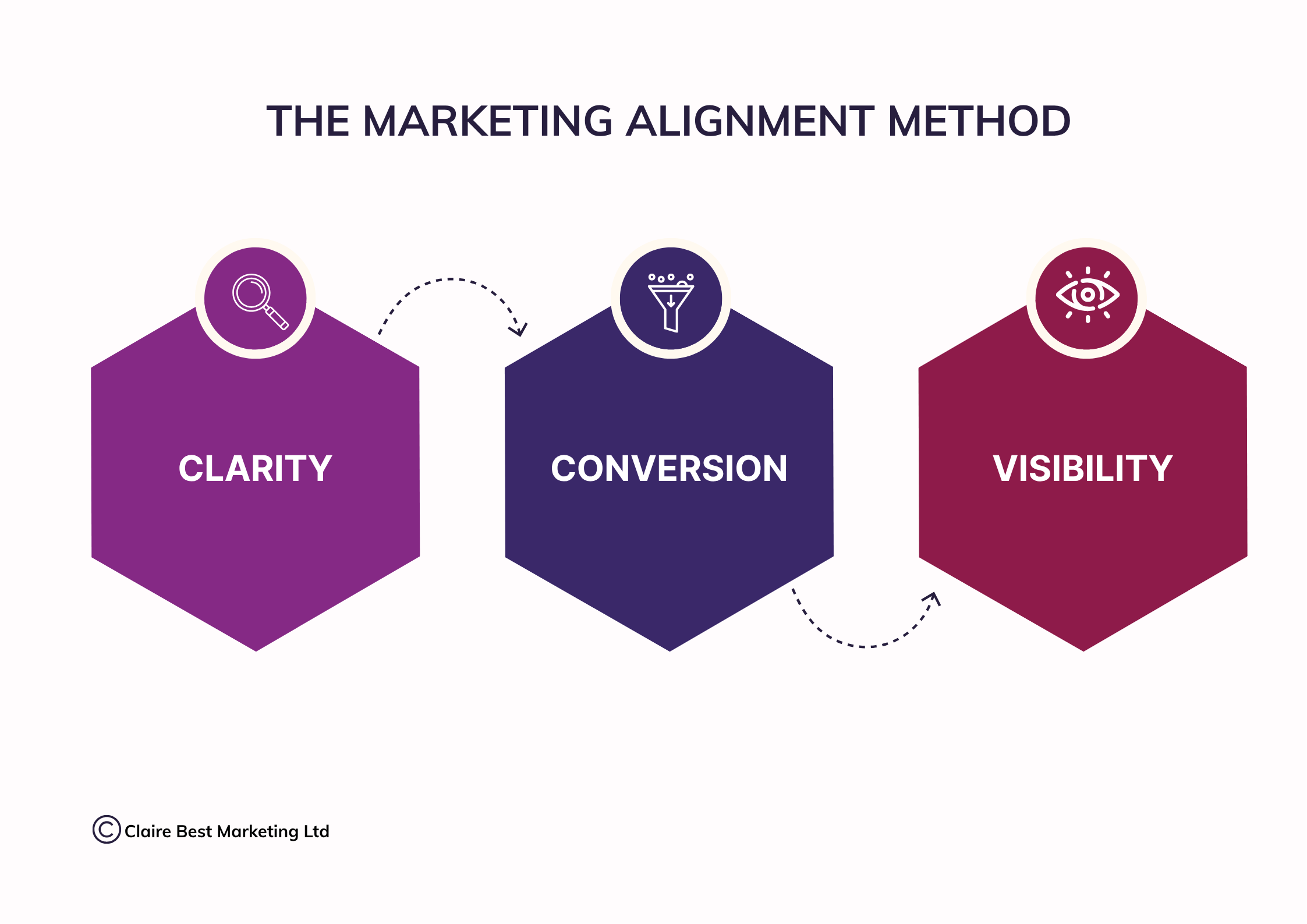
That’s why I developed the Marketing Alignment Method. It looks at your marketing in three stages:
CLARITY - Who are you trying to attract and why should they choose you?
CONVERSION - Are enough of your enquiries turning into customers?
VISIBILITY - Do enough of the right people know you exist?
Get clear about who you want to attract and why they should choose you. Make sure you’re converting the opportunities you already have. Then focus on getting in front of more of the right people.
So, what marketing should you be doing?
Once you’ve got the foundations in place, the next question is where to focus your time and budget. And there isn’t one marketing mix that works for every business.
The right choice depends on who you’re trying to reach, how they buy, what you’re selling, your budget and the resources you have available to keep your marketing going.
So rather than trying to be everywhere, let’s look at some of the main options and when they might make sense for your business.
SEO and being found on Google
Helps the right people find your business when they’re actively searching for what you sell.
Good if: people are already searching online for the products or services you provide.
Build visibility, demonstrate your expertise and develop relationships with the people you want to reach.
Good if: your buyers are on LinkedIn and trust or expertise plays a part in choosing you.
Email marketing
Keep in touch with customers, prospects and contacts, and give them reasons to come back to you.
Good if: you already have an audience or customer base you could be making more of.
Local marketing
Help people in the areas you serve find your business through local search, reviews and your Google Business Profile.
Good if: where your customers are based matters to your business.
Content marketing
Share useful ideas, advice and expertise that help potential customers understand what you know and how you can help.
Good if: customers need to build confidence in your expertise before they’re ready to buy.
Networking and referrals
Build relationships, stay front of mind and create opportunities for recommendations and introductions.
Good if: relationships and recommendations play an important part in winning new business.
How do you decide where to focus your marketing?
You don’t need to do everything. In fact, trying to be everywhere is one of the easiest ways to waste both time and money.
Start with your customers. Where do they go when they need a business like yours? Do they search on Google? Ask people they trust? Spend time on LinkedIn? Are they already on your database? Do they need to see your expertise over time before they’re ready to buy?
Then think about what’s realistic for your business.
A marketing activity only works if you can do it consistently and well. There’s little point committing to three social media platforms, a weekly email and a blog if you don’t have the time or resources to keep them going.
01 Who are you trying to reach?
Different customers respond to different types of marketing.
02 Where do they look for businesses like yours?
Google, LinkedIn, recommendations, events, their inbox? Start where your customers already are.
03 How do they make the decision to buy?
A quick, transactional purchase needs different marketing from a service where trust builds over weeks or months.
04 What can you realistically do well and consistently?
Your time, skills and budget matter. Two or three activities done properly will usually beat ten done sporadically.

Still not sure what marketing to do?
Sometimes you’re simply too close to your own business to see where the biggest marketing opportunity lies.
I’ve spent more than 30 years in marketing, from senior roles with businesses including John Lewis, Prudential and Lloyds TSB to working directly with SMEs through Claire Best Marketing.
I can help you take a step back, look at what’s working, what isn’t and where your marketing time and budget are most likely to make a difference.
If you’d like some help working out what your business needs next, let’s have a chat.