
Does thinking about what marketing you need to do in 2027 bring you out in a cold sweat?
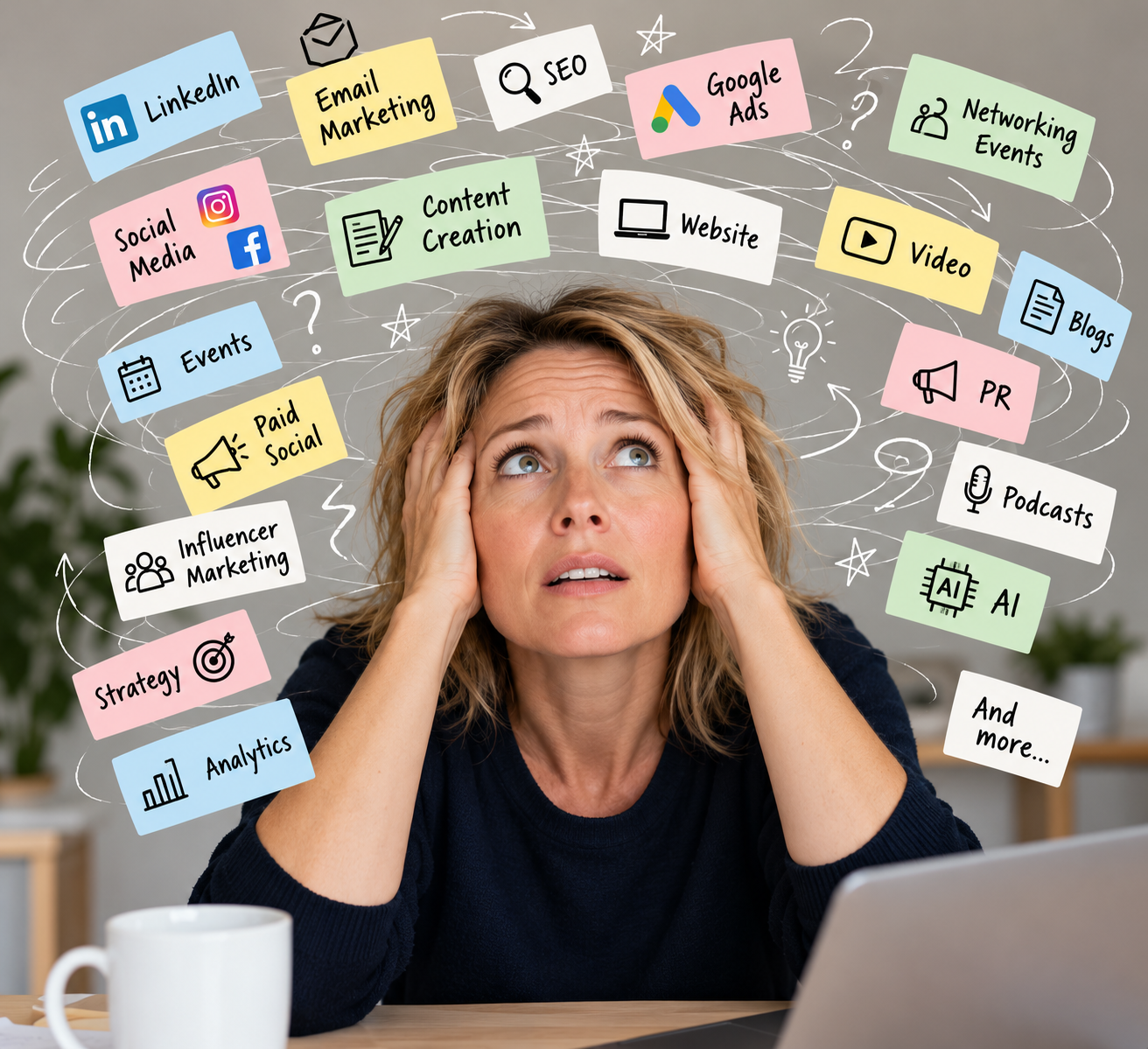
There's so much to choose from. LinkedIn. Email marketing. SEO. Google Ads. Networking. Events. Video. Blogs. PR. Podcasts. AI. And that's before somebody tells you about the latest marketing platform you absolutely HAVE to be on.
There's always something else you could be doing.
The problem is, when businesses start planning their marketing, this is often where they begin. They think about all the activities they could be doing and then try to work out how they're going to fit them all in.
I'd start somewhere completely different.
Good marketing isn't about doing more. It's about working out what marketing your business actually needs.
Start with the business, not the marketing
Before you start talking about LinkedIn posts, email campaigns or Google Ads, look at what the business is trying to achieve. What needs to happen in 2027? Perhaps you want to increase revenue. You might want to grow a particular service, attract larger clients, launch something new, move into a different geographical area or generate more repeat business from existing customers.
Those are business objectives. Your marketing needs to support them. If you don't know what you're trying to achieve, it's very difficult to decide where your marketing time and money should go.
Who do you actually need to reach?
“More customers” isn't a target audience.
Once you're clear about what the business needs to achieve, think about the people you need to reach to make it happen. If you want to grow a particular service, who is most likely to buy it? If you want larger clients, what does a larger client actually look like for your business? If you're expanding geographically, where are the customers you want to attract? And don't automatically assume the answer is always new customers. There may be significant opportunities sitting within your existing customer base. The clearer you are about who you're trying to reach, the easier it becomes to work out how you're going to reach them.
Start from the inside out
One of the reasons marketing can feel overwhelming is that businesses often start with visibility. Should we post more on LinkedIn? Do we need to improve our SEO? Should we try Google Ads? Should we be doing video? But before you decide how you're going to get in front of more people, you need to make sure you've got the foundations right. This is why I use my Marketing Alignment Method, which works from the inside out:

Clarity
Are you really clear about who you're trying to attract, what you're offering them and why they should choose you? If people don't quickly understand what you do, who it's for and why it matters to them, increasing your visibility can simply mean more people seeing a message that isn't clear enough.
Conversion
What happens when somebody is interested? Look at the journey from enquiry to paying customer. How quickly do you respond? How easy is it to buy from you? Are your proposals and follow-up working? Where are potential customers dropping out? Before you spend more money generating enquiries, make sure you're making the most of the ones you've already got.
Visibility
Now you can think about how you're going to reach more of the right people. This is where LinkedIn, SEO, email marketing, Google Ads, networking, events and all those other tactics come in. But now you're not choosing them because you feel you should be doing them. You're choosing them because you know who you need to reach, what you need to say and what you want to happen next.
Your marketing strategy is your compass
I think of a marketing strategy a bit like a compass. It gives you direction and helps you make decisions about where to focus. By this point, you know what the business needs to achieve, who you need to reach and where your marketing needs attention. Your strategy brings that thinking together and gives you a clear direction. The tactics come afterwards.
Only now should you be deciding whether SEO, LinkedIn, email marketing, Google Ads, networking, events or something else deserves a place in your marketing plan. You're choosing those activities because they can help you get where you're trying to go, not because somebody has told you that you should be doing them. And your strategy should help you decide what not to do too.
There will always be another platform, opportunity or new idea competing for your attention. Your strategy gives you something to come back to and ask:
Does this actually help us get where we're trying to go?
If it doesn't, perhaps you don't need to do it. That's how you move from being busy with marketing to being intentional about it.
Decide how you'll know whether it's working
The final part is deciding what success looks like and that doesn't necessarily mean measuring likes, followers or website traffic. Go back to the business objective. If the aim is to generate more enquiries for a particular service, measure that. If you want to improve conversion, track how many enquiries become customers. If you're trying to generate more business from existing customers, measure the additional revenue you're generating from them. There will be marketing measures that help you understand what's happening along the way, but ultimately your marketing needs to contribute to the objectives you started with.
Keep coming back to your strategy

Your marketing strategy shouldn't be something you create for January and then forget about. When somebody suggests a new idea halfway through the year, come back to it. Does this help us achieve what we're trying to achieve? Does it reach the people we're trying to reach? Does it address the marketing challenge we've identified? Is it more important than the things we've already decided to prioritise? That makes it much easier to make decisions about your marketing throughout the year, rather than continually adding more things to the list.
Make 2027 the year you become more intentional with your marketing
You don't need to start January with a huge list of marketing activities. You need to know what your business is trying to achieve, who you need to reach and where your marketing needs to make a difference. Then you can decide what you're actually going to do. Get that right and your marketing becomes much more focused, much easier to manage and much more likely to deliver a return.
If you'd like some help getting your thinking out of your head and into a clear marketing strategy, I've created a Marketing Strategy Workbook to help you work through the process.
And if you'd rather work through it with me, get in touch and let's have a chat.

Claire Best Marketing helps service-based businesses gain clarity, sharpen their messaging, and create marketing strategies that truly convert. With 30 years of marketing experience from major brands, Claire brings senior-level expertise tailored to the unique challenges of small and medium-sized enterprises.
Claire works closely with business owners to remove guesswork and wasted effort, delivering straightforward, practical plans designed around each client’s goals. Supported by a trusted team of specialists, she provides expert marketing support without the overheads of a traditional agency.
Whether you want to learn how to market effectively yourself or hand over the entire process, Claire empowers you to focus on running your business while she drives your marketing success.
claire@clairebestmarketing.com | www.clairebestmarketing.com