
When people talk about rebranding, the conversation often moves very quickly to logos, colours and fonts. But by the time you get to those decisions, a lot of the important work should already have happened.
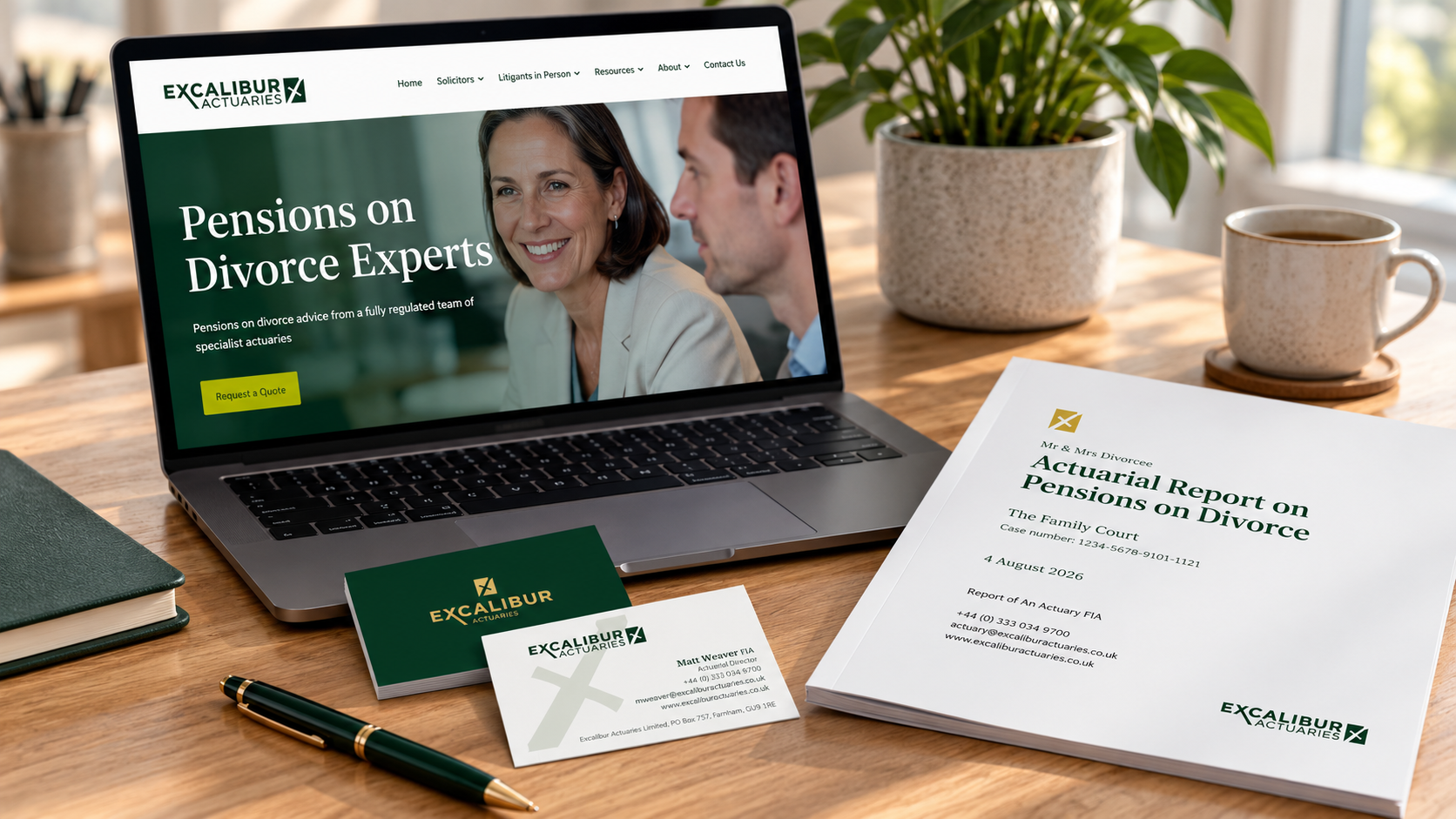
I’ve recently been through a full rebrand with Excalibur Actuaries. It was a substantial project involving research, positioning, values, proposition, visual identity, a new website, and the not insignificant job of applying the new brand across the business. The project reinforced something I’ve believed for a long time:
A successful rebrand is about much more than changing how a business looks.
When your business has outgrown its brand
Excalibur had always had a strong reputation and plenty of leads, so marketing hadn't necessarily been a major priority. But the business had grown. They had taken on more people and needed to generate more opportunities to support that growth. That meant taking a much more proactive approach to marketing and, in turn, looking at the brand.
The existing branding had been around for some time and looked dated. The website wasn't providing a particularly good user experience either.
The business had moved on, but the way it presented itself hadn't moved with it.
It would have been very easy at this point to jump straight into a new logo and website. Instead, we went right back to the beginning and looked at what the business needed its brand and marketing to do.
The research came first
Excalibur invested in proper market research. We looked at what competitors were doing and, spoke to customers about their experience of working with Excalibur and what they valued about the business.
It gave us a much clearer understanding of where Excalibur stood in the market, how customers saw them and where their real points of difference lay. That meant we weren't developing the brand based purely on what we thought the business stood for. We had evidence to work with.
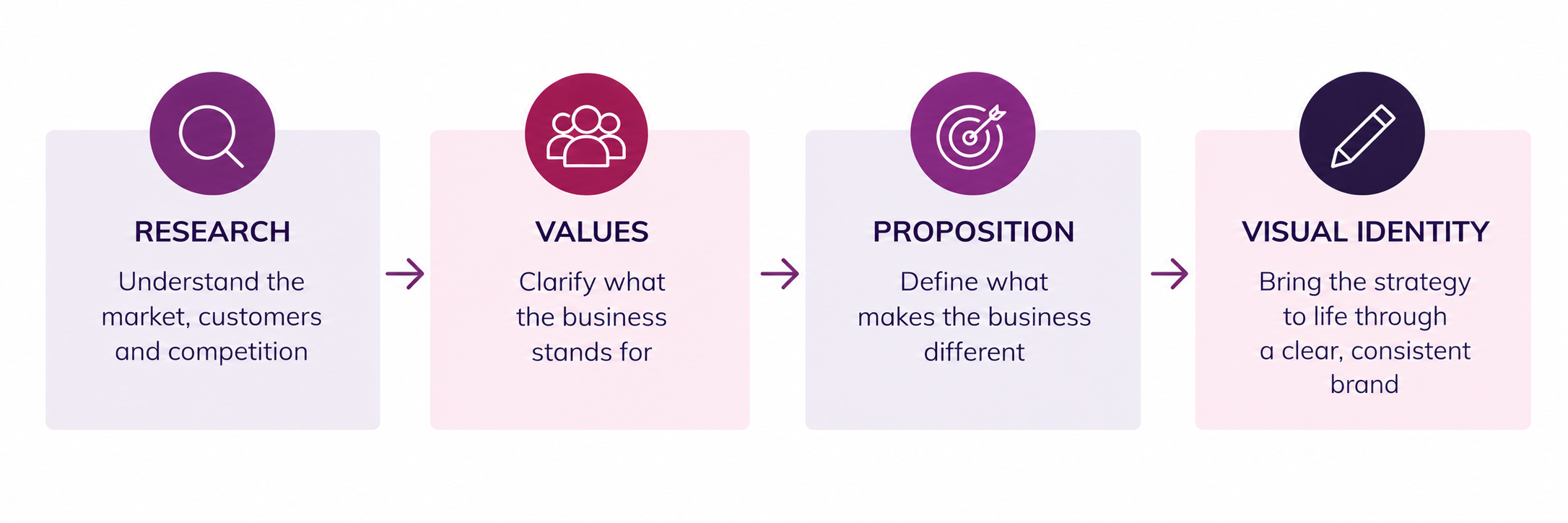
We used the research findings to revisit the company values and develop the proposition before moving on to the visual identity.
When we eventually briefed the designer, she was ecstatic. Rather than being asked to make Excalibur look more modern or simply come up with some new ideas, she had research, a clear proposition, values and an understanding of what we wanted the brand to communicate. The creative work had something very solid to build from.
Who gets a say in your rebrand?
Throughout the Excalibur project, I'd been working with the main stakeholders of the business. We agreed the direction of the visual identity. When it was subsequently taken to the wider board, they wanted to explore it further. That raised an interesting question:
How widely does a rebrand need to be agreed?
There's no single answer because every business is different. But it's worth establishing at the outset not only who your main project stakeholders are, but whether there are other people who will ultimately want or need to have a say.
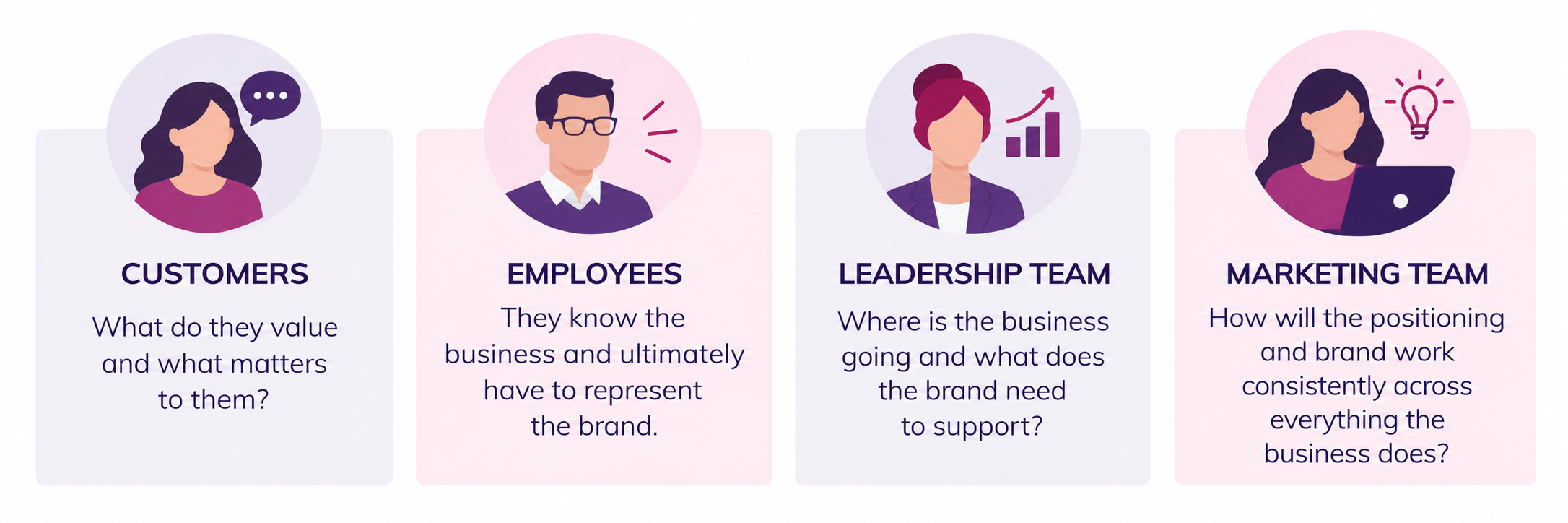
Customers, employees, the leadership team and the marketing team can all bring different and useful perspectives to a rebrand. They won't necessarily all have the same role in the process, or the final say, but it's worth understanding whose input you need and at what stage.
The challenge is making sure those different perspectives don't turn the process into a question of everyone's personal likes and dislikes. That's where having clear objectives and research behind the rebrand becomes so useful. You can keep coming back to what you're trying to achieve, who the brand needs to appeal to and what you want it to communicate.
The groundwork made the website easier
By the time we started developing the new website, we weren't staring at a blank screen wondering what Excalibur should say about itself. We had a proposition, understood the audience and had developed the messaging. We also had the new visual identity and a much clearer idea of how the business should present itself.
All that prior work made developing the website considerably easier because we weren't trying to work out the positioning, messaging and look of the business at the same time as building the site. We had something solid to work from and all the different elements were working towards the same thing.
That doesn't mean everything about the brand was set in stone before implementation began. In fact, the process was quite iterative. As the website developed, we could see how the new brand worked in practice and some elements evolved with it. Photography was a good example. Once we started applying the brand to the website, it became much clearer what style of photography would work and we were able to develop the guidelines around that.
I think that's an important part of the process. You can make lots of decisions on paper, but sometimes you need to see the brand being used before you know exactly how all the different elements should work together.
Don't underestimate the implementation
Getting the new visual identity agreed can feel like a major milestone, but there's still a lot of work to do. One of the things the Excalibur project really demonstrated was just how far a brand reaches across a business. There were the obvious things:
the website
social media
presentations
business cards
email signatures
But we also had substantial client reports, invoice templates and listings on external directories to change. It's only when you start working through everything that you realise quite how many different places your brand appears.
For Excalibur, one of the biggest pieces of work was their reports. These are substantial technical documents and an important part of what clients receive, so applying the new brand to them required far more thought and detail than simply changing a logo and a few colours.
There was another consideration too. These weren't just documents sitting in a marketing folder. They were reports the actuaries had developed, refined and worked with over many years. We were making changes to their “baby”. Understandably, people had strong views about them and there were practical reasons why certain things worked in certain ways. That meant involving the people who actually use the reports, listening to what mattered to them and finding a way of applying the new brand without losing what made the documents work. It's a good example of why implementing a rebrand needs input from people across the business, not just the marketing team.
Customer communication was also part of the implementation. Existing customers already knew and trusted Excalibur, so we wanted to take them with us rather than suddenly presenting them with a completely different-looking business. We explained what was changing and why, while reassuring them that the business they knew wasn't suddenly becoming a different company. The new brand was a better reflection of the Excalibur they already worked with and where the business was going.
For any business considering a rebrand, it's worth thinking about implementation much earlier than you might expect. Look at where your brand appears, who uses it and who is going to be affected by the change. It will probably be a longer list than you think.
Your team needs to understand the new brand too
Your wider team also has an important part to play. It's not just a case of announcing the new brand, sending everyone the new logo and asking them to start using it.
People need to understand why the business has rebranded, what you were trying to achieve and what the new brand is intended to communicate. If they've simply been presented with a new look without any of that context, it's much harder for them to understand why it matters or what their role is in making it work.
There are practical things to deal with too. Email signatures need updating, people need access to the right templates and fonts, and everyone needs to know where to find the latest versions of reports, presentations and other materials. Otherwise it's very easy for an old document to be pulled out of a folder six months later and suddenly the previous brand is back in circulation.
These things might sound small compared with developing a new proposition or website, but they're part of what makes a brand consistent. Your employees are also some of your most important brand ambassadors. They're speaking to customers, attending meetings, sending emails and producing documents every day, so the way they use and talk about the brand matters.
A rebrand is about much more than a new logo
The visual identity matters. Of course it does. It's the part of the rebrand that customers are most likely to notice, but hopefully this gives you an idea of just how much sits behind it.
With Excalibur, we started with what the business was trying to achieve. We researched the market, competitors and customers, revisited the values and developed the proposition before moving into the creative work. That thinking then fed into the website, photography, reports, documents and all the other places where the brand needed to work.
There were also people to bring with us. Different stakeholders had a perspective on the brand, customers needed to understand the change and the wider team needed to know why it was happening and how to use the new brand consistently.
That's what turns a new visual identity into a rebrand. It's not simply about looking different. It's about making sure the way your business presents itself reflects who you are, the customers you want to attract and where the business is going.
If your business has grown or changed significantly but your brand hasn't changed with it, it may be worth asking whether it still represents the business you are today and the one you're trying to build.
I work with businesses on the strategy and thinking behind a rebrand, bringing in trusted specialists to help create and implement it. If you're wondering whether you've outgrown your current brand, get in touch and let's have a chat.

Claire Best Marketing helps service-based businesses gain clarity, sharpen their messaging, and create marketing strategies that truly convert. With 30 years of marketing experience from major brands, Claire brings senior-level expertise tailored to the unique challenges of small and medium-sized enterprises.
Claire works closely with business owners to remove guesswork and wasted effort, delivering straightforward, practical plans designed around each client’s goals. Supported by a trusted team of specialists, she provides expert marketing support without the overheads of a traditional agency.
Whether you want to learn how to market effectively yourself or hand over the entire process, Claire empowers you to focus on running your business while she drives your marketing success.
claire@clairebestmarketing.com | www.clairebestmarketing.com